Are you seeing some Oshkosh homes fly off the market while others linger and wondering why? You are not alone. When you are buying or selling in Winnebago County, it helps to know what actually moves prices here, from lake proximity to mortgage rates and the ebb and flow of listings. In this guide, you will learn the local forces at work, the key metrics to watch, and how to time your move. Let’s dive in.
What drives Oshkosh home prices
Supply: listings and new builds
Prices rise when there are fewer homes for sale and slow when inventory grows. In Oshkosh, available listings are shaped by a mix of older housing stock, post‑war suburbs, and new subdivisions. Floodplains and wetlands near Lake Winnebago and the Fox River limit where new homes can be built, which can keep desirable areas tight on supply. Building permits and the pace of construction also matter, since new homes add to future inventory.
Demand: jobs, rates, and household formation
Local employment anchors demand. Major employers such as manufacturing, healthcare, education, and government help support household formation and relocations. Mortgage rates set what buyers can afford; when rates fall, more buyers enter the market and competition can heat up. Demographics play a role too. University activity from UW–Oshkosh supports rental demand and can spill into entry‑level purchases when graduates stay in the area.
Segments behave differently
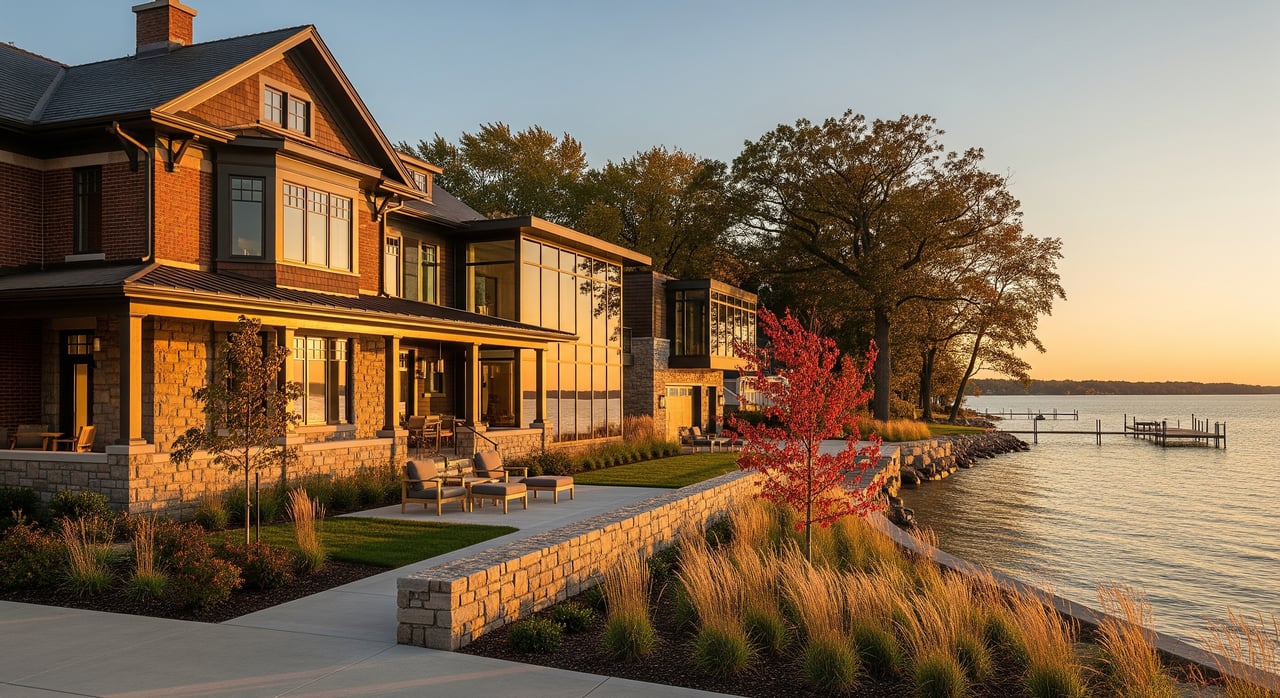
Not every property type moves the same way. Waterfront and lake‑adjacent homes often carry a premium due to limited supply. Historic homes near downtown attract buyers who value character and walkable amenities, where renovation needs can affect pricing. Newer suburban single‑family homes tend to follow family‑oriented demand patterns. Condos and townhomes can offer more affordable entry points when budgets are tight. Investor interest, especially for short‑term rentals, can influence values around event seasons.
Seasonality in Oshkosh
- Spring (March–May): Activity jumps. More listings, more showings, and many buyers target summer closings. Sellers often see the strongest offers in this window.
- Summer (June–August): Activity continues, with more lakefront showings. Short‑term rental demand spikes around late‑July events, which can affect weekly rental pricing.
- Fall (September–October): Activity eases. Some buyers who missed spring re‑engage, and pricing pressure often softens a bit.
- Winter (November–February): The slowest season with fewer listings and longer days on market. Motivated buyers face less competition, which can create opportunity.
Market signals to watch
Track these indicators monthly or quarterly to understand where prices may be headed.
- Median sale price trend: Shows overall direction. Compare local movement to regional context using the FHFA House Price Index.
- Inventory and months of supply: Fewer months often means a seller’s market; more months points to a buyer’s market.
- New listings vs. closed sales: If new listings are growing faster than sales, conditions may cool. If the reverse is true, competition can rise.
- Median days on market (DOM): Falling DOM signals a faster market and potential multiple offers.
- List‑to‑sale‑price ratio: Closer to 100% (or above) suggests stronger seller leverage.
- Price per square foot: Helpful for comparing similar homes and neighborhoods. Remember that age, condition, and lot type matter.
- Pending sales: A forward‑looking sign of closings in the next 30 to 60 days.
- Building permits: Show the pipeline of future supply. Check the U.S. Census Building Permits Survey for trends.
- Local jobs and unemployment: Watch employment stability and hiring announcements. The Bureau of Labor Statistics Local Area Unemployment data and the Wisconsin Department of Workforce Development provide context.
- Demographics: Household formation trends and migration affect demand over time. See the U.S. Census American Community Survey for broader patterns.
How to read short vs. long‑term shifts
- Short term (month‑to‑month): Often driven by mortgage‑rate changes, seasonal listing waves, and buyer psychology. Use DOM and pending sales as your quick reads.
- Medium term (1–3 years): Influenced by local job trends, migration, and new construction delivery.
- Long term (3+ years): Shaped by demographics, infrastructure, and economic diversification. Waterfront constraints and steady employer bases can support long‑run values.
Buyer playbook for Oshkosh
- Get pre‑approved and confirm your rate‑lock window before touring. You want to be ready when the right home hits.
- Watch inventory and DOM weekly. Falling inventory and short DOM mean you should act quickly and write competitive, clean offers.
- Be flexible on product type and location. Consider condos, townhomes, or slightly outside the core if you need more value.
- Focus on properties with stable fundamentals, including access to employment centers and minimal flood risk.
- If you plan to hold 5+ years, weigh total cost of ownership, not just list price.
Seller playbook for Oshkosh
- Time your listing. Spring typically brings the largest buyer pool, while winter can reveal motivated buyers with less competition.
- Price to the moment. Use the latest comps, inventory, and DOM to set a number that attracts attention and invites strong offers.
- Elevate your presentation. Professional staging, photography, and thoughtful pre‑market repairs can reduce days on market and improve outcomes.
- Plan your next move early. If you are buying locally after selling, coordinate timelines or explore interim options if replacement inventory is thin.
Investors and short‑term rentals
Lake proximity and seasonal events can drive short‑term rental demand in specific weeks, especially in midsummer. That can boost rental income potential, though it does not usually shift long‑term sale prices by itself. If you are exploring this route, review local zoning, licensing, and neighborhood rules before you buy.
Putting it all together
In Oshkosh, prices reflect a tug‑of‑war between lean supply, steady local demand, and ever‑changing mortgage rates. If you track inventory, DOM, list‑to‑sale ratios, and permits, you will have a clear read on where leverage sits. Pair that data with smart timing and polished presentation, and you will be set up to move with confidence.
Ready to talk strategy for your specific home or search? Reach out to Lindsey Kate for a local, staging‑first plan that aligns with your goals.
FAQs
Is now a good time to buy a home in Oshkosh?
- It depends on inventory, days on market, and your mortgage rate; lower inventory and fast DOM mean more competition, while higher inventory and easing rates create more opportunity.
Will Oshkosh home prices keep rising this year?
- Price direction hinges on local jobs, how many new listings hit the market, mortgage rates, and the new‑build pipeline; watch permits, DOM, and pending sales for early signals.
What does “months of supply” mean for Oshkosh buyers?
- It measures how long current inventory would last at the recent sales pace; fewer months favor sellers, while more months can give buyers leverage.
When is the best time to list a house in Oshkosh?
- Spring usually brings the most buyers and strongest offers, but a well‑prepared listing can sell in any season if it is priced and presented correctly.
Does the midsummer event season affect Oshkosh housing?
- It often raises short‑term rental demand and weekly lodging prices, but it typically does not change long‑term sale prices except in areas with concentrated short‑term rentals.